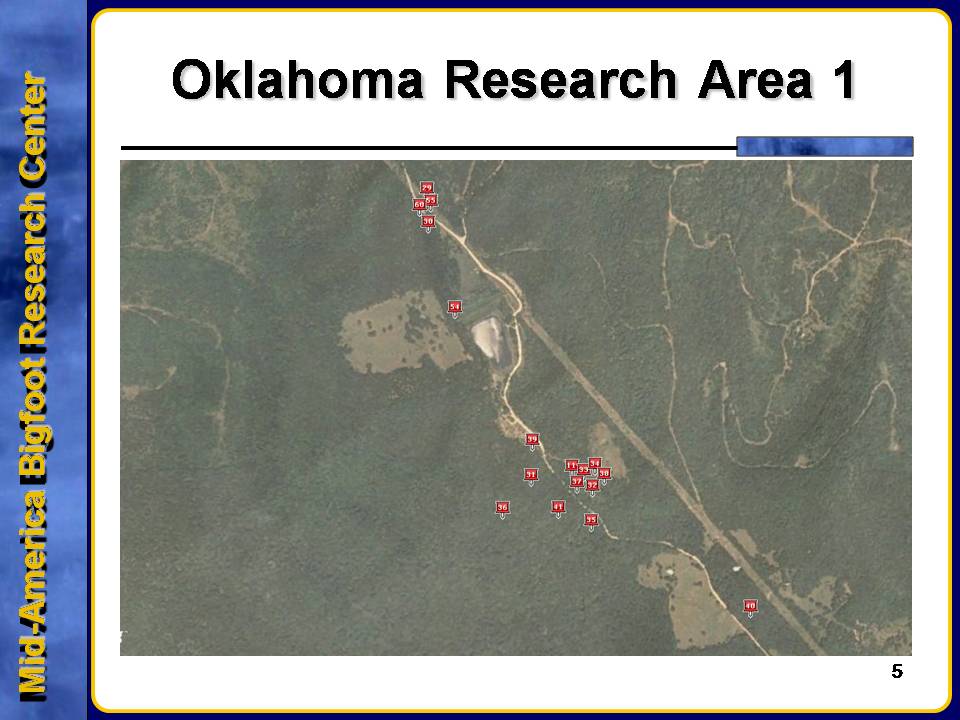
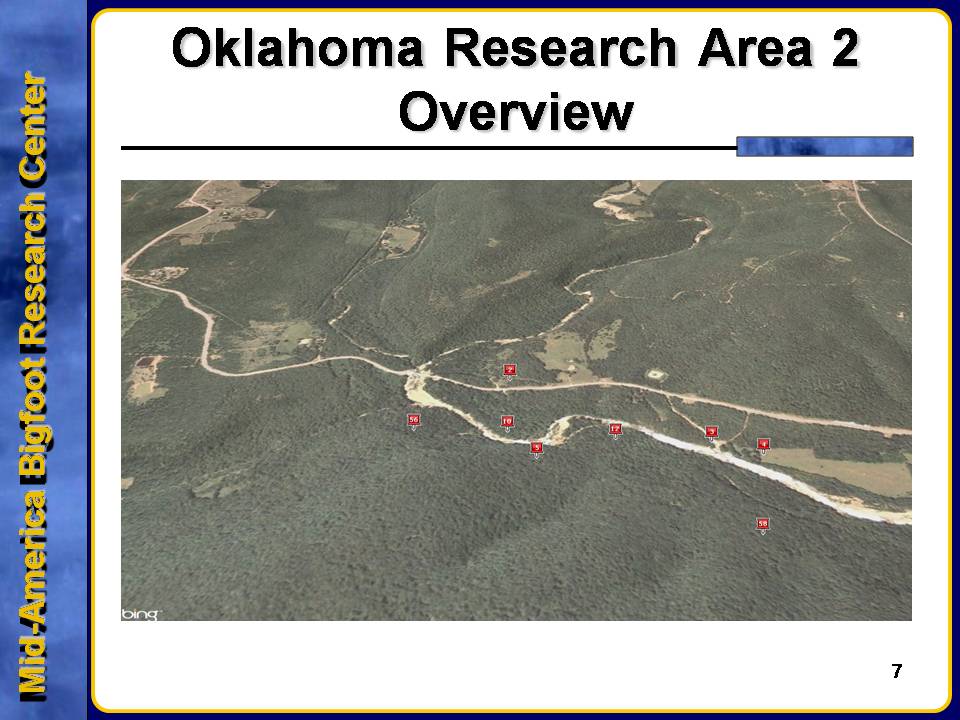
While doing research, in particular, photo analysis, the importance of using an EXIF viewer on the photos is very critical, in that it reveals a lot of information that the researcher can use in that analysis. The following slides are from the MABRC Training Facility and is used to train MABRC Researchers in this very important aspect of research. ALWAYS!! use an EXIF viewer to look at the details on a photo, don't never take anything at face value, no matter who it is that provides you with a photo.
By Randy "Rebelistic" Savig, Senior MABRC Field Researcher, Missouri State Director. After I did the research paper and compared purported Bigfoot vocals with other primate I have been questioned on why I didn't put in there that they "talk" as humans do. Well honestly, I didn't because I don't know. Yes I suspect that they may have a rudimentary type of language based on some of the audio that I have collected over the years. However that is also an interpretation of mine. I am not a linguist and have no training on making any assumptions other than my personal feeling on the matter. There was some very interesting conversation from folks that I would like to address here. One fella said that they had to have a language to trade with the natives. I know that there are those that claim it happened and I guess I really don't doubt that it could happen but what is considered trading? There have been a lot of reports of raided coolers in campground, freezers on porches, even taking feed out of deer feeders and cattle feeders at night. Did they leave something behind? Most never took a look to say one way or the other. Was the trade items talked about something that they had with them such as a branch, or rocks? That was left behind? Not really as a trade but a way of freeing up their hands to take something else? I suspect that was more of the way it went and the thought of stealing is taking without exchange so it could be seen as a trade. What we think of a trade today is something exchanged to both parties benefit and satisfaction. So if that was what was considered as a trade, there was no need for talking. I have had several folks that heard mumbling in the woods bring that up. With questions like: If it wasn't talking what was it? I have heard and recorded that type of stuff myself and have asked the same question time and time again. There are a lot of reports of them mimicking anything from other critters in the woods to calling people’s names. The first time I heard what I suspect was a mimic it was one single word. While setting up a parabolic early one morning in the dark I heard what I thought was a person say "Hey". This was 5 a.m. on a cool November day. I was there until 10 and never saw or heard another person, and with only one way in, there were no other trucks. That was what made me consider the possibility of Bigfoot mimicking. Here's the thing that is interesting to me. No other primate can imitate human speech. Yes there are some birds that can but no other mammals or primates that I have found. So it could be said that IF it was a Bigfoot that did it apparently it have the physical traits needed to produce that ability. Then a few years back I was fortunate enough to record something mimicking what I was saying at camp as I discussed the possibility of them being able to mimic. Here is what was recorded. Headphones are best for listening to this as it is faint. This for me pretty solidified that there is something in the woods that can mimic us. I have also caught other stuff that could easily be either a mimic or possible language. But the big question is which is it? Another thing I have heard a lot is that it sounds like an Asian talking, or people think they hear Native American word from one tribe or another, or even English. I do know from doing this audio stuff now for a few years that our ears can play tricks on us as much as our eyes can. It is only natural for us to try and make sense of what we are hearing and identify it with what we can understand. The most famous one that is talked about is the Sierra Sounds recorded by Ron Moorhead back in the 70s. I do think it is authentic, however I question if that was the Bigfoot trying to mimic what they were hearing and that was the best they could do without practice. Even we humans with the physical traits needed to make speech, we can actually talk without practice and a need to do it. We see kids all the time that really don't talk until about 3-4 years old, usually because siblings do it for them or they use gestures like pointing to get what they want. The type of language for us is nothing more than interpretation on our part, usually from sources like TV. We can all remember trying to sound like the Chinese or Asian from the TV shows we watched when we were young. We'd do our best samurai talk and it was sort of like it in inflection and structure so to us it sounded good but in actuality it was nothing more than gibberish. It would make no sense to a person that actually spoke the language. I remember back when I was a little fella watching the old westerns and just KNEW that all Indians said "How" for hello. And the sounds they made during dances etc. Wow what we learn from TV. As I got to know people from the local tribes I found out it was not only way off but was even insulting. Point being, without an actual reference our minds have a real ability to KNOW things that may not be true. Back to the Sierra Sounds, it may have been the first time those Bigfoot had heard people and that was as close as they could get to what they were hearing. Another eye opener for me was a documentary that is on Netflix. It is called "First Contact: The Lost Tribes of the Amazon". It is a show on how some of the tribes in the Amazon are coming out to modern people and the problems they face. The local people there are distant relations with them and were separated between 100-150 years ago. The languages had evolved on both sides to the point that they could no longer understand each other. Because of this, there are tons of misunderstandings between them. If anyone is interested I would highly suggest watching it because there is so much there to be learned. On a side note, there was one tribe that when in the jungle, had certain whistles that were used. However the reasons have yet to be understood. So for me when I hear that they said this word or that word in a native language I highly question it. Even more so when I hear people say they are saying this or that in English and they play the clip it is a HUGE stretch most times to actually hear what they say they hear. It's kind of like those ghost hunter folks on TV that have some sound recorded and they say it says this (or print it on the screen) and then you hear it. That is how our minds work. If we are told what it says, we can usually hear it. But if we aren't told what it says we can't. The one thing that is the hardest thing for me in audio review is to actually hear what the sound or vocal is before my mind identifies it. We are instinctually programmed to quickly identify sound as a survival tactic and respond accordingly that makes it easy to misidentify things. That is also why we have as many misunderstandings as we do with other people. We think we heard them say this when actually they said something else. It happens all the time. Take my name, Randy. If I am in a busy place like a restaurant and someone says "Candy" my mind only heard the last part of the word and I think they are talking about me or to me. So when you think you hear something like a word, we really need to make sure our minds aren't filling in the blanks. Now that I have I have talked about how what we are hearing may be misinterpretations, I like to bring up a couple of points that I think are something to think about. Again I think it is pretty much a given that Bigfoot does have the ability to mimic other critters and maybe even people. A lot of people are at the thought that all we are hearing is the sounds it makes to communicate with others. All animals do it. Certain sounds communicate certain things. Science has done a lot of study on this over the years and has come up with a lot of good stuff. And yes, critters will use different vocals for different things like contentment, warnings, etc. Some studies have even proven that they can have different vocals for the different threats. One thing I have found in my research is that those vocals sound pretty much the same and without a spectrogram and seeing what is around in context with the vocal it would be really difficult to notice the difference. For a lack of a better way of putting it, they all sound pretty much the same. Here lays one thing we need to look at. Primates are able to make different sound for different things like I talked about in my comparing purported Bigfoot vocals with known primates. Do to the mouth/lip structure that is in primates we can make sounds that other critters can't. Listening to the YouTube clips above there are sounds there that need a primate mouth/lips structure to make. Language as we know it needs a Hyoid bone. And to the best of our knowledge only humans or extinct hominids have them. It has been proven that Gorillas, Chimpanzees and others have the intelligence to communicate with sign language using it in proper structure and context for the situation that they are in. So it is safe to say, the thought patterns of these primate are there for language. Now there has been recordings of hearing what is most likely a mimic during some of the MABRC Expeditions. One in particular is the recording of something saying "Bobbie" several times after everyone had turned in. Look at the structure of the lips/mouth that would be required to say that. No known critter in nature has the lip/mouth structure to make those sounds except primates. Another time in the same area "Izzy" was heard. Take the "Z" sound. What critter can make that? A lot of the consonance sounds seem to be only done with the lip/mouth structures of primates. Now I have no idea as of yet what sounds can or cannot be made without the Hyoid bone as my research hasn't found those answers yet, but I suspect that the ability they appear to have to mimic humans talking may show that it could be there. In all reality until we get some DNA evidence we won't know for sure. Personally I wouldn't be surprised if they did have a language, however, I think it would be rudimentary at best. Even our human ancestors having a Hyoid bone I suspect didn't use as much language as we do today. With them living in close proximity with each other as they did, it wasn't really needed. It wasn't until our ancestors started to expand from smaller groups that talking became more and more important. That is when language as we have come to know it evolved. Even today people close to each other communicate more by gestures than we even notice. Reading body language is instinctually understood even though we can talk. I know from spending a lot of time with the MABRC folks around the campfire discussing things that there seems to be an even split on this topic. Some who have heard and recorded what sounds like mumbling conversation feel they do have a language of sorts. And the others feel it is just instinctual animal communications. The answer is in the woods. And hopefully with collecting and comparing more data, we can get a clearer picture of what is actually happening.
Recently it was brought to the attention of Bigfoot Hoaxers Exposed 2.0 on Facebook, of a group of individuals in Western Oklahoma who have been perpetrating hoaxes and posting it in Bigfoot groups. This group thought that no one would call them out on it until they posted an obvious hoaxed photo, that not only was exposed as a log laying on the ground, but several other researchers who knew where the exact location is, come forward to confirm it was a log on the ground. Here is the photo in question followed up by the two zooms the person that submitted them posted with it.
(Photos being used it is placed here under Title 17.
Not withstanding the provisions of sections 106 and 106A, the fair use of a copyrighted work, including such use by reproduction in copies or phonorecords or by any other means specified by that section, for purposes such as criticism, comment, news reporting, teaching (including multiple copies for classroom use), scholarship, or research, is not an infringement of copyright.)
Here is the original post, and it does include the person's name, we do not believe in protecting someone if they are legitimately trying to commit a hoax on people.
Several folks looked at the photo and concluded that it was the end of a log protruding out from the tree. When Chris was asked for further clarification, here is how that conversation went.
As you can see, Chris got very belligerent when called out on taking comparison photos. This led him to being removed from the Oklahoma Bigfooters: Research and Bigfoot Sightings group page on Facebook.
Here is what many saw, the second photo shows the red lines where the log is seen extending from behind the log.
It was a log, pure and simple. But now the kicker, other researchers in Western Oklahoma who had dealt with this guy and knew all about him, know exactly the spot where he claimed this photo was taken, and they confirmed it was nothing more than a log on the ground.
So about a week later, Chris posts what he claims are comparison photos that he took of the spot to quell the jealousy of those who claimed he didn't have a photo of a Bigfoot. I'm posting them here for people to compare for themselves.
Okay, so you ask yourself, well didn't he go back and take the comparison photos like you asked him to? Not really, if you look closely at the photos compared to the original one, he conveniently didn't take pictures of the same spot, he moved about 75 feet over to the right and took photos of an entirely different spot. Chris is hoaxing the entire story and the photos to fit into his story. He fabricated this story, knew the photos if he took them of the same spot would show it was indeed a log, so he had to take photos of a different location.
For anyone who reads this blog, and you live in the Western Oklahoma area, please be aware of Chris and anyone that hangs with him, they have been caught hoaxing other incidents too.
Author Randy "Rebelistic" Savig, Missouri State Director, MABRC
Over the years of researching the elusive primate that we have come to call Bigfoot, there seems to be some consistently purported vocalizations in areas of activity. Even though I suspect that that Bigfoot uses a much wider variety of vocalization, some of which it has probably never been recorded, the most common seem to be the long howls(calls), the whoop, knocks, and screams. Others that have been reported are grunts, whistles, roars, as well as woohoo.
As we know all primates also use gestural communication also. The most common of these is rock or stick throwing, thumping and stomping, branch breaking, and bluff charges. One other thing that seems to be significant with researchers is the feeling of being watched. If you have ever been someplace and got the feeling you were stared at and looked around and found someone doing it you can understand this feeling. It happen a lot with people. Other primates such as a gorilla it seems to be for a fairly specific reason.
staring:This where the sender has its eyes fixed on the receiver, the eyebrows are lowered, the head is angled down, and the lips are parted and pursed (Estes, 1991). This communicates aggression or annoyance (Estes, 1991).
We all got that look from our parents and grandparents so we all know what this one means!
With the modern-day advances of the Internet, researching sounds and animals has become easier. Facebook and YouTube has in a lot of ways made Bigfoot research even harder with all the hoaxing that goes on with YouTube videos, as well as all the fringe groups with their cult-like followings. However, you can use both as a positive thing. When looking up primate vocalizations YouTube is full of them. In doing so it is easy to copy the file and put it on a spectrogram compared to the purported Bigfoot vocalizations. Facebook is not a great place where you can compare vocalizations with other researchers as very few do the background work and think everything is bigfoot. I have heard so many normal animal vocals like owls, foxes, even squirrels being said is bigfoot. But if a person is diligent you can find good folks who are willing to share and compare.
In doing this paper I find it much easier to post a video with primate vocalizations than it is to try to describe. The YouTube videos that I am using here are for comparison and educational use only. And by no means am I claiming ownership of the majority of them. However I have done what I can to insure that what I have used is authentic to the primate being represented. I have done a lot of reading of information available on the Internet and come up with this hypothesis. A list of referenced material are shown at the bottom of the page. But as a disclaimer goes, this is my opinion based on extensive fieldwork, hundreds and hundreds of hours of audio review, and talking with other researchers about the suspected Bigfoot vocalizations. I would really like to see other researchers use some of this in their research areas to either help confirm that it is a correct hypothesis or a false one.
It seems like a lot of times in Bigfoot research. We hit a spot where what we used to do just does not seem to be working anymore or were not getting the answers to the questions our research is brought about. I have put a lot of time in thought into this project and I am hoping with using this as a template that may be some more interactions can be made and knowledge increased. All the skeptics out there will look at this and say that it is a bunch of BS because Bigfoot is not been proven to exist. However, with all the researchers that have had sightings and other interactions know that they exist. This entire paper is been written from a researchers point of view.
When looking at the vocalizations and gestural communication of the known primates, there seems to be a pattern of the use of certain vocalization that all primates use. I believe that if we use what is known in the primates, it could help in deciphering what the purported bigfoot vocalizations may mean, as well as how we can use them in the woods while researching these animals. By no means am I saying that this is the only possibility for the purported bigfoot vocalizations. Until such time where they can be monitored by science to where the vocals are seen in context we will not know.
Historically, the common view of animal communication was that each vocal utterance corresponded to a particular emotion; screams for fear, barks for aggression, and coos for comfort (Smith, 1977; reviewed in Cheney & Seyfarth, 1990a; Hauser, 1996)
There is an ongoing debate about whether and to what extent nonhuman primate vocalizations are intentional, voluntarily controlled communicative means (TomaselloandZuberbu¨hler 2002). Although vocalizations seem to be largely innate, with a limited number of vocalizations in an individual’s repertoire, there is flexibility in regard to the usage and comprehension of vocalizations, with some species even comprehending the calls of other species, which requires learning (Zuberbu¨hler 2000a). In addition, there is some variation in certain calls as a function of population-specific dialects (Mitani, Hunley, and Murdoch 1999) or affiliation to a particular matriline (Hauser 1992)
There the specific vocals
seen by scientists in context are talked about.
When we compare that to the purported Bigfoot vocals, it may be useful
in the woods while researching. Here is
a good site for comparing a lot of non-primate vocals.
The long call in primate research doesn't just mean the length of the call but more with the distance that it can be heard. Most of these are used to as a way to joining back up the troop for food or as a possible mating call. This is even true for humans. Years back before texting and cell phones your parents would stand on the porch and yell for the kids and family at dinner time. Even though we couldn't hear the actual words we knew the call. Even in areas where there were kids from different families everyone knew who's mom was calling.
In Chimps: pant-hoot: This is consists of a series of loud calls which are rising and falling in pitch and often end in a scream (Nishida and Hiraiwa-Hasegawa, 1987). This call is most often given by males, but females may also give it (Nishida and Hiraiwa-Hasegawa, 1987). This call is given at abundant feeding sites, after smaller groups have been reunited after a few days, a response to loud calls, and as a response to charging display (Nishida and Hiraiwa-Hasegawa, 1987).
In chimpanzees, the production of vocalizations varies with rank and social context: at Kibale, high-ranking males call in all social contexts, whereas low-ranking males and females only call in mixed parties (Clark, 1993). At Gombe, all rank and sex classes also call in mixed parties at the provisioning site (Clark, 1993; Marler & Tenaza, 1977). Call production in chimpanzees also varies with ecological context. Captive studies show that production of loud calls (pant-hoots) in feeding contexts differed by the quantity and divisibility of the provisioned food (Hauser et al., 1993). Earlier work on wild chimpanzees at Gombe and Kibale (Ghiglieri, 1984; Wrangham, 1977) suggested that loud calls (arrival pant-hoots, APH) given upon arrival in food patches by male chimpanzees function to attract allies, mates, or both to abundant food sources.
In
Orangutans: loud call: This call is given by the
adult male and consists of roars at first and then rises to bellows and is
enhanced by the throat sac. This is used to demarcate territories and to
attract a mate, and is important because the orang-utan lives in such dense forests
that it is difficult to see other individuals.
( Parental Notice: This one was only selected for the long call and does show mating so it should be watched by adults only)
Bonobovocalizations have been studied in captivity (van Krunkelsven et al., 1996; deWaal, 1988) and the wild (Bermejo & Omedes, 1999; Hohmann & Fruth, 1994; Mori, 1983). It has been suggested that the long range vocalizations of this species, such as the high-hoot, are structurally better for localization of the source than for carrying over distances greater than 500 m (Hohmann & Fruth, 1994; deWaal, 1988). Male and female calls differ in pitch (Hohmann & Fruth, 1994). Krunkelsven et al. (1996) found that production of soft, “food peep” vocalizations was related to both social context and food quantity, but did not find sex differences in calling behavior in either context. De Waal (1988) described more than a dozen distinct types of loud and soft calls used by bonobos in captivity. During his study, most loud calls were used in exchanges between parties out of visual contact rather than being directed at individual conspecifics. Loud calls were also given during party movement and were associated with feeding (de Waal, 1988). More recent captive studies have shown that bonobos change their foraging behavior in response to food-associated calls from others (Clay & Zuberbühler, 2009, 2011). Wild studies have found that bonobo loud calls vary through the day and were most frequent in late morning and late afternoon. The later peak was associated with travel to and construction of night nests. Observed parties’ most common response to calls of distant parties was to vocalize and/or travel (Hohmann & Fruth, 1994)
Using this information I think it is reasonable to suspect that vocals like the Missouri Scream and others have the same function. If one is to use call blasting as a way of trying to draw in possible bigfoot from a distance, this is one that I suspect will work.
The biggest drawback for using call blasting is that with the equipment most researcher can afford can not get an adequate volume or sound quality of the original call. However it is worth a try and there are those who have had success. Just try and keep the volume mid-level to keep the mechanical sound to a minimum.
Here is some of the vocals purported to be bigfoot. It seems to pretty much cover all the categories I've covered here.
Whoops, and other short abrupt calls.
One calls that Bigfoot is purported make is the
Whoop. In primates it would appear that
these loud sharp and short vocals are used as an alert or mild aggression. From
my personal experience while researching it does seem to be a alert call. When we spotted what we took to be a juvenile
and was mimicking what it was doing there was the vocals about 30* to our left
that seemed to warn the juvenile that we had seen it.
Here is a compilation of some of the whoops I have recorded.
An example of the ways in which a communication system is not arbitrary is that across all known animals that make noise, a quick, high, sharp sound means danger. Conversely, a low, sustained sound is reassuring. Wilson, Hauser, and Wrangham (2001) showed that, in response to the playback of the pant-hoot call of a single extragroup male, parties with three or more males consistently joined in a chorus of pant-hoots and approached the loudspeaker together, while parties with fewer adult males usually stayed silent and approached the loudspeaker less often.
In gorillas wraaa: This call is given as a fear vocalization especially the fear of something strange (Estes, 1991). wraagh: This call is also an outburst, but not deep as the roar, and is monosyllabic in nature (Estes, 1991). This call is mostly emitted by the silver-back male (Estes, 1991). This is emitted when the individual is experiencing sudden stress, and group members scatter when hearing this call (Estes, 1991).
pig grunts: This call consists of a series of short guttural noises (Estes, 1991). This call is given by adult males and females, and communicates mild aggression (Estes, 1991). This call is emitted when the adult wants access to preferred foods or right of way (Estes, 1991). question bark: This call consists of a short series of three notes, the first and third being lower in pitch than the second (Estes, 1991). Mostly this is given by the silver-back male, and he emits this when he discovers someone that was concealed or another individual that is making noise but can not be seen (Estes, 1991).
I highly suspect this to be true with the purported bigfoot screams to. This has been reported in sightings reports and may also be the "Woman being murdered" vocal that we hear reported. I have recorded screams in the woods that I have suspected to be related to bigfoot. There was one time in particular where they seemed to respond to our granddaughters screams. It even did appear as if whatever was screaming was moving closer. However there were no possible sightings or suspected close activity so I'm not sure what was going on.
This
next one was recorded at an active research site in Oklahoma.
We
do know that in human a scream is usually done when we are startled or
scared. Could on going screams mean that
there is something to fear in the woods? In call blasting or mimicking this
could be a way of drawing them in. The
researcher should be ready in case this is a scared or threatened bigfoot
vocalization. It could take make for a
negative experience.
Grunts, Knocks, Woohoo,(Woo) and Whistles
There is a unique
way that primates keep track of one and another in the forests. Some of the
ways are listed below. I suspect the
purported bigfoot knocks and other vocals are used for this purpose. With the Silent Hill Project showing that
knocks do NOT carry long distances, it can be assumed that it is a location
type of call. Each primate has a way of
determining parent and offspring vocals through various vocalizations. Although the differences may be subtle and
only seen on the spectrogram each is individual.
Japanese Macaque coos
The
coo is a common short-range vocalization between group members. It didn't seem
to be restricted to any particular situation, but was just a noise that they
made sometimes. He looked at spectrograms of the coos, divided them into
different types, and realized that certain types happened during certain
circumstances. This suggested that primate repertoires might be bigger than we
had thought- and also that their calls were more context-specific than we had
thought, which raised possibility that they might also be more representational
than we had thought.
Here is
what I suspect is the calls of the Woo, Woohoo vocals reported with possible
Bigfoot activity. These are some of what
I have recorded during my research.
Knocks.
Knocks are the one of the most common sounds associated with suspected Bigfoot activity. Even though we do not know the exact mechanism used, whether the wood on wood, rock on wood, or even could be a hand clap, chest beat. The mechanism used is not known as it has not been observed. Recently we have started to respond when we hear what we suspect is knocks.
Here is a few times where we did have success to that.
Here is a real odd one. A two tone double knock.
Even though we have had some success at getting responses to knocks, we always mimicked them and did not start the knocking sessions. Again, these are not long distance sounds. So if you are in the woods and hear one, I would suggest trying to reply. It may extend the experience. Grunts. This is one of the vocals that is reported and in my opinion is the least understood. As shown above gorillas can make a pig grunt type of vocal. pig grunts: This call consists of a series of short guttural noises (Estes, 1991). This call is given by adult males and females, and communicates mild aggression (Estes, 1991). This call is emitted when the adult wants access to preferred foods or right of way (Estes, 1991). However the belch vocal that gorillas also use is a sign of contentment. belch vocalizations: This call is given by all gorillas, generally when they are stationary, and generally communicates contentment (Estes, 1991). These noises consist of purring, humming, rumbling, crooning, moaning, and soft-grunting noises (Estes, 1991).
Table 1. Overview of close call types and their contexts described for mountain gorillas (MG) and western gorillas (WG). Call type Species Context Syllabled calls Grooming, in response to noise, by mothers to infants, towards the end of resting periods (Harcourt & Stewart, 1986; Harcourt et al., 1993; Stewart & Harcourt, 1994) Single grunt MG/WG Feeding, resting, travelling (Salmi et al., 2013) Double grunt MG/WG Individually distinct (Seyfarth et al., 1994); feeding, resting, travelling (Salmi et al., 2013) 2 subtypes MG Spontaneous and reply call (Seyfarth et al., 1994) Triple grunt MG Unknown Inverted grunt MG Unknown Train grunt/whinny∗ MG/WG Mating (Harcourt et al., 1993; Salmi et al., 2013; Watts et al., 1991; Sicotte, 1994) Non-syllabled calls As chorus when individuals are feeding and moving close together (Harcourt et al., 1993) Grumble MG/WG More by low ranking as compared to high ranking individuals (Harcourt et al., 1993); feeding, resting, travelling (Salmi et al., 2013) Hum MG/WG Mainly feeding, rarely resting and travelling (Salmi et al., 2013) High hum/sing MG/WG Feeding (Salmi et al., 2013) Dog whine MG Unknown
In Chimps
pant-grunt: This consists of a series of soft, low grunts (Nishida and
Hiraiwa-Hasegawa, 1987). This is given by subordinate individuals to dominate
ones as a response to dominance displays, such as the charging display
(Nishida and Hiraiwa-Hasegawa, 1987).
Here is where you can compare a lot of gorilla vocals with. By listening to this the above vocals will
make more sense.
Here is a site with some of the best Chimpanzee vocals I have been able to find for comparison purposes. Do to high number of vocals that chimps do for the range of reasons there is a lot of stuff here. http://gombechimpanzees.org/activities/vocal-communication/ Some of the grunts that are reported as possible bigfoot may have the same purpose as some of the grunts we hear could be like the Belch Vocals of the Gorillas and the pant-grunt in the Chimps, a relaxed vocal. However some of the grunts seem aggressive like the Pig Grunt in Gorillas. I do think that a seasoned researchers should try to mimic these types of vocalizations to see how they are responded to. If they are a non threatening vocal it may help to extend the encounter and possibly add to it. Until this type of vocal is studied more I would not suggest to be alone if you do it.
Aggressive vocals, Roars, Charge Displays Roars are I believe with every animal as sign of aggression. Here is one of a gorilla roar. Notice the way it charges the people behind the glass. Because of the glass and it knowing it is there it is really unknown if this was a bluff charge or would have been a real one.
Here is some of the possible roars that I have recorded over the years. Even though I can not say definitely they are from a bigfoot they don't seem to match with the known animals in my area. With primates known to use roars when aggravated it is not out of the realm to think that a bigfoot wouldn't. Here is some of what I think are roars from my research area.
chest-beating: This behavior is done by all gorillas and the either one or two
open-fist hands are clapped against the chest (Estes, 1991). Adult males
produce a sound when doing this because of air sacs they have which are located
on both sides of their throat (Estes, 1991). For the adult male this is a
threat display (Estes, 1991).
In Chimps charging display: This is where an individual is running and/or throwing objects such as branches or stones and/or pant-hooting, drumming, slapping, stamping, and screaming (Estes, 1991). This display is performed by adult males and occurs when a dominant meets another individual after a long time or done by the alpha male to keep all others subordinate to him (Estes, 1991). This display also occurs by an adult male when there is a heavy rainstorm (Estes, 1991).
This type of thing may account for the for some of the broken branches and trees that some have attributed to bigfoot. When other primates use these things to display dominance or as a way to show off to a possible mate it would not be a huge leap to suspect bigfoot could also do displays like this. We all know this happens in humans too. All the behaviors we see such a bullying, trying to gain attention from the opposite sex, even the favorite line of "watch this" in childhood and adulthood is to try and show worthiness. Here is an audio clip that was recorded of what I suspect is bigfoot. It shows all the characteristics of aggressive sounds that is used by primates. It is unknown of why the vocals were made as it was recorded with a recorder left on the truck during a day hike. (This is a long vocal event and has not been altered in time or quality)
(This is a shorten clip with comparisons to a gorilla and some of the
audio cleaned up for better clarity)
And it is not a one time event.
This type of thing is also somewhat in the grunt category so as I said
above using any type of grunt is a risk.
Only researchers that are ready for the possible results should attempt
to use it either as a mimic, or in call blasting in the field.
One other thing that is reported with bigfoot is smell. There are numerous reports of a smell associated with Bigfoot. Some primates have a smell at times. If this holds true with bigfoot as it does in other primates it could also explain why it is not reported every time. People also have more odor produced if they are nervous or excited. In Gorillas fear smell:This is produced by the silver-back male, and comes from glands under his armpits (Estes, 1991). This signals excitement or an aggressive threat (Estes, 1991).
Starting your own research (Presentation slides are at bottom of the article) The most common question MABRC members get posed to them is “How do I find my own research area?”, and after conducting numerous presentations at Bigfoot conferences on how to find and develop a research area, we decided to put it in print for the Guidelines Manual.
To start with, a researcher should check out sighting reports for their immediate area, starting with BFRO, GCBRO, Bigfoot Encounters, MABRC and other Bigfoot Research groups that obtain reports in your area.
Look for Class “A” type, or actual sightings that have occurred in the reports, and compile a list of those sightings including the location, this will be important later.
Go to Microsoft Research Maps at http://msrmaps.com and zoom into your area. This site allows you to switch between aerial photos and topographical maps. This allows you to view the area from different perspectives.
You can also go to http://www.google.com/earth and use this to plot the sightings you look up onto a satellite map to get a better overview of where they are in relation to one another.
You also need to look for prominent features for an area, like water sources, food sources, natural cover and concealment, and natural or man-made avenues to travel on.
Watersheds and lakes support large numbers of various wildlife and a watershed can support a Bigfoot troop with food and water year round. Interconnecting waterways should also be examined to see where they may give a travel avenue between locations. In many of the MABRC research areas, certain creeks connect the areas together, although they may be many miles apart.
Food sources are important too, local farms raising pigs, cattle, chickens and other agricultural food stuffs give Bigfoot an opportunity to food. Large deer populations, wild edible plants, fish, mussels and turtles in the area will sustain a sizable Bigfoot troop. Garbage dumps/bins and slaughterhouses should also be viewed as possible food sources.
Three main research areas of the MABRC are within 5 miles of a major landfill, with multiple sightings within that 5 mile radius.Cover and concealment seems to be always favored by Bigfoot and this includes box valleys, bluffs with overhangs, sheltered valleys, heavy foliage and abandoned rock quarries. Look for places that a Bigfoot could hunker down during bad weather and exploit these areas during those times.
Avenues to travel on include railroad lines, pipelines, electric/utility right of ways, old roadbeds, old trails and dikes. While it isn’t proven that Bigfoot use these to travel on, the MABRC has conducted a study that shows many reports happen within several miles of an avenue of travel.
Talking to locals may also benefit finding a research area, hand out brochures, business cards or other advertisements. Talk to area residents, listen to talk in restaurants, let folks know you are interested in their stories. Talking to local law enforcement and newspaper reporters can also gain you access to strange reports that might be disregarded if they didn’t know about you and your willingness to investigate.
Recon an area by driving around it, walk through it (make sure you have the landowner’s permission first though), observe and note, and even sit and listen with a parabolic listening device, you may be surprised what you hear.
Document everything you find out about an area, photograph everything, it may not seem important now, but it may later. GPS everywhere you go, mark it on a map of the area for later reference.
While these tips may not benefit everyone, as each person will obviously find the best ways to locate their own research area, it still gives individual researchers a basic sense of how to locate their own research areas.
While there is no set procedure for scouting out and finding your own research area, the MABRC can give pointers to individual researchers on how to locate potential “Hot Beds” of activity.
Topographical and Aerial Photos
One of the first steps is to check out topographical maps of potential areas you want to check out, you can access many online through http://www.bing.com/maps or the U.S. Geological Survey website at http://store.usgs.gov and learn everything you can about reading these types of maps.
Prominent features that you want to look out for are water sources, food sources, natural cover and concealment, natural or man-made avenues to travel on.
Watersheds and lakes
Watersheds and lakes are also important to take note of. For example, Oklahoma has numerous watersheds that support large numbers of wildlife, and it’s surmised that each watershed can support a Bigfoot troop. With interconnecting waterways, these can provide a safe avenue of travel for a troop, as well as being dependable water sources.
During droughts, troops are more likely to stay close to water sources even at the risk of detection.
Food Sources
Food sources can be local farms with large numbers of livestock (i.e. pigs, cattle, chickens, etc.) or even large plots of agricultural items. Large deer populations are also a draw for Bigfoot, along with wild edible plants. For the types of edible plants in your area, please refer to Project Foodbasket on the MABRC Forums.
Water sources can also have an abundance in fish, mussels and turtles.
Garbage dumps and bins also seem to attract Bigfoot as they rummage through them looking for food. At Honobia Oklahoma, the town dumpsters are on the south side of town, and multiple sightings have occurred where the Bigfoot were found to be going through them.
Slaughterhouses are another good place to locate, as many rural slaughterhouses don’t always follow EPA guidelines and sometimes dump the remains of slaughtered animals in dump pits out of sight. This occurred in the mid-90s with the white Bigfoot being caught going through the dump pit on numerous occasions.
Cover and Concealment
Look for areas that Bigfoot can use to conceal themselves and to cover their movements. Such things as box valleys, bluffs with overhangs, sheltered valleys, heavy foliage and even abandoned rock quarries can provide a troop with numerous options.
Avenues to travel on
There is a lot of debate in the Bigfoot community about Bigfoot using easy avenues to travel on. In the MABRC, we concentrate our efforts near railroad lines, pipelines, electric/utility right of ways, old roadbeds, old trails and even dikes. While the likelihood of Bigfoot using these avenues may be unlikely, the possibility exists that they could use them as navigational aids to travel long distances. In the research areas in Mid-Eastern Oklahoma, the majority of Class “A” sightings have occurred within 3 miles of a major electric right of way that cuts through the area. Researchers in the area have worked on this theory for well over 6 years now, and their belief in this appears to be well-founded with the number of encounters and activity experienced not only by themselves, but other MABRC and Independent Researchers who have visited those areas.
Sighting Reports
Going through the various sighting report databases, whether it be the MABRC OSSIE Database, the BFRO, GCBRO, Oregon Bigfoot, etc., will also bring about a better picture of an area. Go back 5 years on sighting reports, as this would allow you to note trends for the 5 years previous to your research in the area. Only use reports that an actual sighting occurred, and note all the details that may be critical, such as direction traveling, location, time of day or night, weather, month, and so on, to give yourself a better understanding of the times and directions that the Bigfoot are using this area.
Places to look for sighting reports
The MABRC maintains a large database compiled of reports from every Bigfoot website that can be found, including the now defunct International Bigfoot Society. Other locations to look are:
http://www.bfro.nethttp://www.gcbro.comhttp://www.texasbigfoot.org (OK, TX, LA and AR only)http://www.texlaresearch.com (TX, LA only)http://www.oregonbigfoot.comhttp://www.bigfootencounters.com
Talk to the locals
Talking to the locals can bring mixed results, but you never know until you begin talking to someone if they have a Bigfoot sighting or know of someone that has. Activity that they were unsure of could also be indications of Bigfoot in the area.
Hand out brochures (the MABRC has one on the forum for MABRC Members to use), business cards (the template is on the forum for MABRC Members to use) and other advertisement means.
Talk to the residents, be courteous and mannerly, do not talk out of turn, do not interrupt and do not lead the conversation, let them tell you in their own words. After they are finished, ask your questions then.
Let folks know you are interested in their stories, do not make the mistake a lot of researchers make by acting like you know everything about Bigfoot.
Talking to local law enforcement and newspaper reporters may bring some serious stares at you, but if they know you are involved in Bigfoot research and an incident in your area happens related to a possible Bigfoot, they hopefully will remember you and give you a call for help in understanding the situation.
Recon an area
It’s now time to recon the area, and at first it will be easier to drive around the area on the local roads, noting the terrain first hand and also any features to watch for in the future. Also take note of buildings, lights and other man-made articles that could divert the path of a troop.After you become familiar with the area, do a walk through the area in the daylight (make sure you have the land owner’s permission first) and get a really good feel for the area. Also look for potential markers that you make encounter during the daylight hours. It’s also a good idea to have a digital voice recorder going so that if any vocalizations occur, you will record them. A camera to take pictures with is also a must.
Always observe and note, remember, there is no such thing as having too much documentation.With all your documentation and onsite visit, you will more than likely locate several good spots to come back with a parabolic and set up a listening post at night (only when you are familiar enough with the area to do so) and listen for signs of activity to occur.
Documentation
Documenting your information is important for review later and for submission of your evidence. Write down everything you find out about an area. Photograph everything, it may not seem important now, but it may later on. Using a GPS to mark important places and tracks where you’ve been will allow you to keep track on a map for later reference and for a return to those locations.